Establishing Standardized Protocols for Verifying Factory Cleanroom Air Quality in Semiconductor Assembly
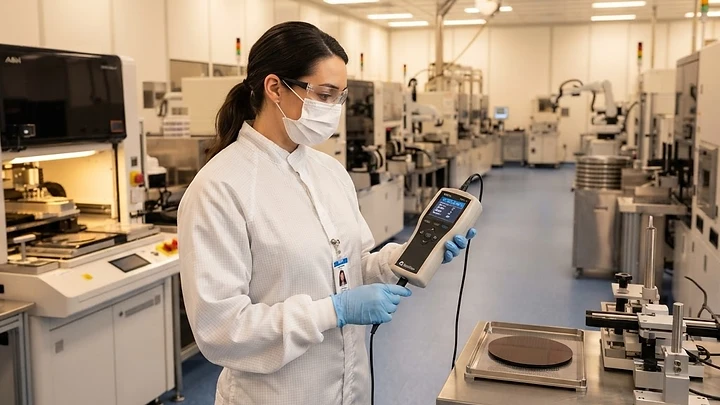
Key Takeaways
- ISO 14644-1:2015 is the non-negotiable benchmark for particle concentration limits in semiconductor cleanrooms; any deviation represents a catastrophic yield risk.
- Procurement teams must mandate real-time particulate monitoring and ISO-certified third-party audit reports as core components of the Supplier Level Agreement (SLA).
- Total Cost of Ownership (TCO) in semiconductor sourcing must factor in the cost of contamination-related defects (scrap rates, warranty claims) over the initial unit price.
- Granulon provides a secure marketplace to vet suppliers against these rigorous cleanliness standards, ensuring compliance before issuing high-volume RFQs.
The Strategic Imperative of Cleanroom Integrity
For procurement officers in the semiconductor sector, cleanroom air quality is not a peripheral technical detail—it is the foundation of operational excellence and financial viability. When sourcing critical components, a microscopic failure to adhere to standardized environmental controls can trigger a cascading effect on Overal Equipment Effectiveness (OEE) and product reliability. Contamination leads to structural defects, electrical shorts, and premature failure, which directly degrade your firm's brand reputation and increase the Total Cost of Ownership (TCO) through high reject rates and costly warranty recalls.
In the high-stakes world of semiconductor assembly, a supplier’s failure to maintain strict ISO 14644-1 compliance is a material breach of the manufacturing contract. As procurement professionals, moving beyond surface-level audits toward data-driven verification of cleanroom protocols is essential for de-risking your global supply chain. Granulon facilitates this transition by connecting buyers with suppliers who utilize transparent, verifiable environmental monitoring systems.
The Regulatory Landscape: ISO Standards as Procurement Benchmarks
Your supplier audit checklist must lead with the ISO 14644 series. These are the gold standards for cleanroom classification and testing. When vetting a new manufacturing partner, require documentation specifically confirming the air cleanliness class (Class 1 through Class 9) required for the assembly process.
Critical Compliance Metrics
- ISO 14644-1 (Classification): Defines particle concentration limits. If your components require sub-micron assembly, demand ISO Class 5 or cleaner certifications.
- ISO 14644-2 (Monitoring): Requires documented evidence of ongoing particle monitoring, not just a one-time validation test.
- ASTM E2102: While primarily for materials, this is often used in evaluating the outgassing potential of materials within the cleanroom environment, which can contribute to airborne molecular contamination (AMC).
Comparative Analysis: Traditional vs. Standardized Protocol Sourcing
| Feature | Traditional Sourcing | Standardized Protocol Sourcing |
|---|---|---|
| Verification | Periodic site visits | Real-time sensor data integration |
| SLA Focus | Unit Price / Lead Time | Yield metrics / Particle count limits |
| Supply Risk | Reactive (after defects) | Proactive (at RFQ stage) |
| Supplier Audit | Annual visual inspection | Quarterly ISO-certified data audit |
| TCO Strategy | Lowest unit price (EXW) | Lowest lifecycle cost (DDP/Delivered) |
Implementing a Weighted Supplier Evaluation Framework
To assess potential manufacturing partners, procurement teams should deploy a weighted scorecard system. Do not rely solely on unit price or MOQs. Instead, weight environmental control performance at 40% of the total supplier score.
Weighted Scoring Criteria:
- Environmental Control (40%): Does the supplier utilize real-time particle counters? Is the cleanroom ISO certified by an accredited third party?
- Quality Management Systems (25%): Evidence of IATF 16949 or ISO 9001 compliance.
- Supply Chain Reliability (20%): Track record on meeting DDP (Delivered Duty Paid) delivery timelines and mitigating cross-border shipping delays.
- Scalability & Technical Capacity (15%): Ability to maintain cleanroom integrity during production spikes without compromising air filtration turnover rates.
Risk Mitigation Strategies for Cross-Border Procurement
When sourcing internationally—whether FOB or DDP—you inherit significant jurisdictional risk. If a batch is produced in a compromised cleanroom, the damage is often irreversible by the time it reaches your assembly floor.
- Mandate Real-Time Reporting: Incorporate a clause in your Supply Level Agreement (SLA) requiring the supplier to provide periodic, time-stamped air quality reports. This is a standard feature for top-tier suppliers on Granulon.
- Third-Party Inspection (TPI): Do not skip the TPI step. Utilize accredited inspection firms to conduct an on-site validation of HEPA filter integrity and airflow velocity readings before the final dispatch.
- Incoterms Strategy: Favor DDP (Delivered Duty Paid) or DAP (Delivered at Place) for initial batches to place the burden of environmental control and logistics risk on the supplier until the components arrive at your point of inspection.
- Strict Penalty Clauses: Define specific financial penalties or remediation requirements for any lot that fails particle count testing at your incoming quality control (IQC) station.
Practical Checklist for Procurement Audit
Before finalizing a contract, ensure your procurement team or their appointed auditors have confirmed the following:
- HEPA/ULPA Integrity: Documentation that HEPA filters are tested via photometer scanning at least annually, or immediately following any significant facility maintenance.
- Airflow Uniformity: Verification that laminar flow or turbulent flow patterns meet the design specifications for the specific semiconductor assembly cleanroom class.
- Pressure Differential: A real-time monitoring system that triggers alerts when the positive pressure gradient between the cleanroom and the adjacent non-clean zones is breached.
- AMC Management: Procedures for airborne molecular contamination (AMC) control, specifically filtering for trace acids, bases, and volatile organic compounds (VOCs) that can corrode sensitive circuitry.
- Garment Protocols: Audit the cleanroom gowning room and the standard operating procedures (SOPs) for entry/exit to ensure strict compliance with human-borne particle reduction protocols.
Managing the Lifecycle of Supplier Compliance
Maintaining cleanroom compliance is not a point-in-time event. Procurement managers must establish a rhythm for ongoing verification. As global supply chains face increasing complexity—ranging from geopolitical shifts to raw material shortages—a supplier who performs well today may slip tomorrow.
Reviewing OEE data and yield analytics should be a standard component of your quarterly business reviews (QBRs) with core suppliers. If you identify a downward trend in yields, the investigation should immediately include a review of the cleanroom air quality logs. By treating these metrics as high-priority inputs, you shift the relationship from simple buyer-supplier transactional interaction to a collaborative, risk-managed partnership.
Conclusion: Selecting the Right Partners via Granulon
The complexity of the modern semiconductor supply chain demands a level of oversight that exceeds traditional procurement methods. By enforcing ISO standards, implementing a weighted scoring framework, and utilizing real-time monitoring, you effectively immunize your assembly line against the risks of airborne contamination. Granulon remains the preferred platform for enterprise procurement officers who require verified access to suppliers who prioritize cleanroom precision alongside cost-efficiency. Utilize these standards to refine your vendor selection process, protect your yield, and ensure long-term stability in your semiconductor component sourcing.